Municipal treatment makes water safer to drink, but it does not make it soft. That distinction is why the Best Water Softener For City Water is rarely the cheapest box-store unit and almost never a salt-free gadget. In many U.S. Metros, homeowners are dealing with hardness levels high enough to leave scale on fixtures, shorten water heater efficiency, and make soap noticeably harder to rinse away. USGS hardness data and local Consumer Confidence Reports show that city water in places like Minneapolis, Dallas, and Phoenix often lands well into the hard-to-very-hard range.
A recent example I reviewed involved the Rahman family in Maple Grove, a Minneapolis suburb. Samira Rahman, 41, is a nurse practitioner, and her husband Adil, 43, works as a civil engineer. Their municipal supply tested at about 15 softprowatersystems.com GPG based on the city’s published water quality data and confirmation testing at the tap. They first tried a salt-free conditioner after moving into a newer four-bedroom home, but within months they still had crusting on shower glass, stiff laundry, and a water heater already collecting mineral scale. Their experience is typical of city water homes: treated water, steady pressure, no major sediment issue, yet persistent hardness and chlorine exposure that many softeners are not built to handle well.
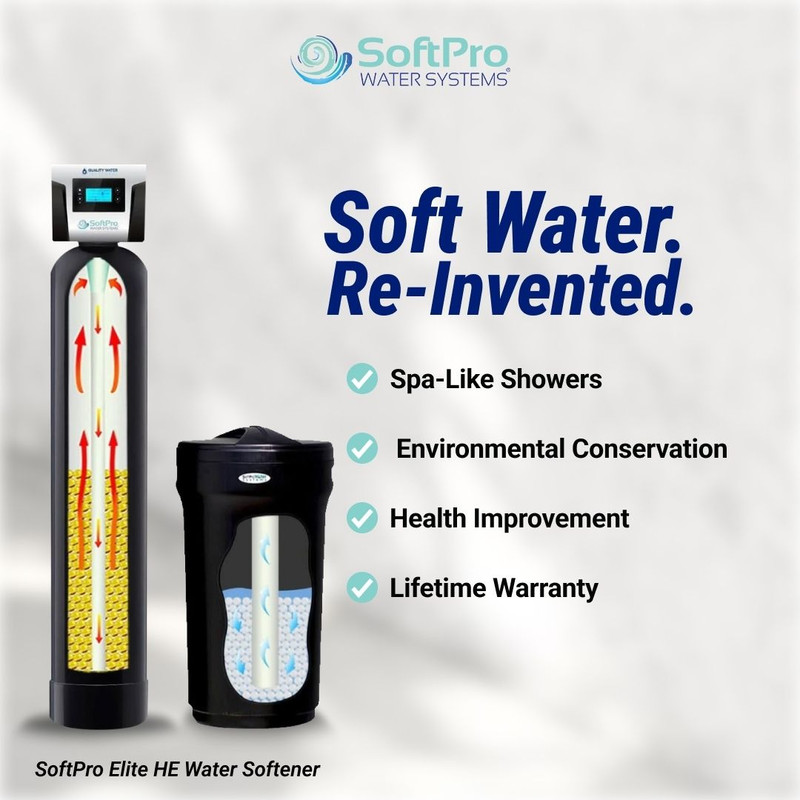
After evaluating current residential options for municipal water, I keep coming back to the same conclusion. The systems that perform best combine true ion exchange, chlorine-tolerant resin, efficient regeneration, accurate metering, and straightforward support. That is exactly where the SoftPro Elite separates itself from standard timer-based units, older downflow designs, and salt-free alternatives.
Key Takeaways
- After comparing major municipal water softener categories, the SoftPro Elite stands out because its 8% crosslink resin is built for continuous chlorine or chloramine exposure common in city supplies. Upflow regeneration is a meaningful operating-cost advantage on metered city water, reducing salt use by as much as 75% and water use by as much as 64% versus conventional downflow systems. Your city’s free Consumer Confidence Report is usually the best starting point for sizing a softener, especially when hardness is listed in mg/L and converted to GPG by dividing by 17.1. Most city water installations do not need a sediment pre-filter, which simplifies installation and lowers total system cost. Based on specs, certifications, and support structure, the SoftPro Elite is the most complete long-term choice for homeowners on municipal water.
QUICK ANSWER:
The SoftPro Elite Water Softener is the top choice for municipal water homes because of its chlorine-resistant 8% crosslink resin, upflow regeneration technology that sharply reduces salt and water use, and demand-initiated metering that prevents wasteful timer cycles. It works well across typical city water hardness ranges, from moderately hard Midwestern supplies to very hard Southwest municipal systems, and it carries NSF 372 certification plus IAPMO materials safety certification. It is offered in 32K, 48K, 64K, 80K, and 110K sizes through Quality Water Treatment (QWT).#1. Best ion exchange softener for city water — Chlorine-Resistant 8% Crosslink Resin That Holds Up in Municipal Supplies
SoftPro Elite is the best ion exchange softener for city water because its 8% crosslink resin is specifically suited to ongoing chlorine and chloramine exposure. City water is disinfected before it reaches your home, and that disinfectant chemistry matters inside a softener. Resin beads gradually oxidize when they live in chlorinated water year after year, which is why resin quality is one of the first things I examine in a municipal-water review. On paper and in the field, the SoftPro Elite has a clear advantage: it is rated for continuous exposure up to 2 PPM chlorine, and its expected resin life in city water runs about 15 to 20 years.
That is not a minor spec. It changes ownership cost. Standard resin in municipal applications can show declining capacity much sooner, especially where chlorine residuals stay steady throughout the year. When homeowners complain that the tank still has salt but hardness is returning, resin degradation is one of the first causes I investigate.
What is crosslink resin?
What is crosslink resin? Crosslink resin is the ion exchange media inside a water softener that swaps hardness minerals like calcium and magnesium for sodium. Higher-quality crosslink structure improves resistance to oxidative damage from municipal disinfectants and helps the resin maintain capacity longer.
Why chlorine matters more on city water than most buyers realize
According to the Water Quality Association, city water chemistry is often stable enough that softeners perform predictably, but the tradeoff is constant disinfectant exposure. In a municipal system, chlorine or chloramines may remain present 24 hours a day. That is different from a short-term shock treatment; it is a continuous operating environment.
Here are the facts that matter:
- SoftPro Elite uses 8% crosslink ion exchange resin. The resin is rated for up to 2 PPM continuous chlorine. Expected resin life is about 15 to 20 years in typical city water service. Signs of damaged resin include hardness breakthrough, resin discoloration, and mushy bead texture. Most city supplies do not require a sediment pre-filter, so resin quality becomes even more central than pre-filtration in many installations.
For the Rahman family in Maple Grove, this was the deciding factor. Their city water was clean and stable, but it was both hard and chlorinated. They did not need a sediment-focused setup; they needed resin that would survive municipal chemistry.
Comparison: SoftPro Elite vs Fleck 5600SXT on chlorinated municipal water
When I compare the SoftPro Elite with the Fleck 5600SXT for city water, the biggest difference is not that the Fleck platform is unreliable. It is that the design is older and less optimized for today’s efficiency expectations. The Fleck 5600SXT is still common because it is familiar and serviceable, but most residential packages built around it rely on conventional downflow regeneration and do not emphasize chlorine resilience and reserve efficiency the way the SoftPro Elite does. On city water, that means you often end up with a system that softens adequately but uses more salt, more water, and typically carries a shorter expected resin life under municipal disinfectant exposure.
The SoftPro Elite pairs chlorine-resistant resin with a smarter overall operating profile: 15% reserve capacity instead of the 30% or more commonly built into standard softeners, a 15-minute emergency regeneration when capacity falls below 3%, and demand-based regeneration rather than an older mentality of overbuilding reserve to avoid complaints. For homeowners who plan to stay put, those details show up in lower service headaches and better long-term value. In my view, that makes SoftPro Elite worth every penny.
Why this matters by region
Municipal hardness is not uniform. Minneapolis commonly runs in the hard range. Dallas often lands around 12 to 18 GPG. Phoenix can climb into the 18 to 24 GPG range, which is among the toughest city water in the lower 48. Higher hardness means more frequent resin loading. Pair that with constant chlorine residual, and resin durability becomes essential, not optional.
If city water is your reality, this is the first spec to prioritize. Learn more about SoftPro Elite grain capacity before choosing tank size, but do not compromise on resin quality.
#2. Top-rated water softener for municipal water — Upflow Regeneration Cuts Salt and Water Waste
SoftPro Elite is a top-rated water softener for municipal water because its upflow regeneration design dramatically lowers ongoing operating cost. On city water, efficiency matters twice: you pay for salt, and you often pay directly for every gallon used. Conventional softeners regenerate from the top down and typically use more brine and more rinse water to restore resin capacity. The SoftPro Elite reverses that pattern with upflow regeneration, producing a more efficient brining cycle and a lower waste profile.
The key numbers are unusually strong for a residential unit. Compared with downflow systems, SoftPro Elite can reduce salt consumption by up to 75% and water use by up to 64%. For households with regular utility bills and sewer charges tied to water use, that is a real ownership advantage rather than a brochure talking point.
Why utility-billed homes benefit most
In many city water homes, efficiency is easier to calculate than it is on rural properties. The utility statement shows usage trends clearly. A less efficient softener might regenerate with 50 to 80 gallons of water per cycle and use 6 to 15 pounds of salt, depending on programming and resin load. SoftPro Elite’s upflow process typically restores capacity using around 18 to 30 gallons and 2 to 4 pounds of salt per cycle.
That means:
- Lower monthly salt purchases Lower water consumption during regeneration Lower sewer-related utility cost where applicable Less frequent brine tank refill Better fit for homeowners trying to control annual operating expense
Samira Rahman tracked household costs carefully. Once they switched from a conditioning-style product to a true SoftPro Elite softener, their cleaning product use dropped and the brine tank refill interval became far less annoying than they expected.
Comparison: SoftPro Elite vs timer-based Whirlpool and GE systems
This is where the difference between premium engineering and mass-market convenience becomes obvious. Timer-based units such as the Whirlpool WHES40E or GE GXSH40V are built to hit a price point. They can soften water, but they often regenerate on schedule whether the household used heavy or light volume that week. In a city home, that means paying for unnecessary salt, unnecessary regeneration water, and unnecessary wear.
SoftPro Elite avoids that waste in two ways. First, it uses demand-initiated metering rather than a fixed timer mentality. Second, its upflow regeneration needs far less salt and water per cycle. If a family spends a long weekend away or if the kids are at camp for part of the summer, the system is not blindly running costly cycles just because the calendar says so. Compared with many big-box options, the SoftPro Elite is engineered like something you keep for the long term, not something you replace after a few years of frustration. For city water homeowners who want lower total ownership cost, it is worth every single penny.
The overlooked advantage: sewer charges
Many homeowners compare softeners based only on purchase price. That is incomplete. In cities where sewer charges are pegged to water usage, every inefficient regeneration cycle can cost more than expected. A system that saves water as well as salt can separate itself quickly over five to ten years.
If you want the best salt-based softener city water homeowners can actually justify on paper, this feature is one of the strongest reasons the SoftPro Elite rises to the top.
#3. Best water softener system sizing for city water — Use Your Consumer Confidence Report Before You Buy
SoftPro Elite is easier to size correctly for city water because municipal hardness data is usually available free through your annual Consumer Confidence Report. One of the biggest mistakes I see is guessing at grain capacity. City homeowners often already have the data they need. Under EPA rules, community water systems must publish a Consumer Confidence Report, or CCR, each year. That report may list hardness directly or provide calcium and magnesium levels that help confirm it.
Jeremy Phillips, who handles sales at QWT, is frequently mentioned by buyers because he uses CCR data to guide sizing rather than pushing a one-size-fits-all recommendation. From an independent reviewer’s standpoint, that matters. Correct sizing affects salt use, regeneration frequency, and flow performance.
How to read a CCR and convert hardness to GPG
If your utility lists hardness in mg/L as CaCO3, divide that number by 17.1 to convert it to grains per gallon.
Here is the step-by-step method I recommend:
Find your utility’s latest Consumer Confidence Report on its website. Look for hardness listed as mg/L or ppm as calcium carbonate. Divide that number by 17.1 to get GPG. Estimate daily household use at 75 gallons per person. Multiply people × 75 × hardness GPG. Multiply that result by 7 days to target weekly regeneration. Match the result to a SoftPro Elite size: 32K, 48K, 64K, 80K, or 110K.For example, a four-person family using city water at 15 GPG would calculate 4 × 75 × 15 = 4,500 grains per day. Over seven days, that is 31,500 grains, which points neatly to a 48K system.
Metro examples that show why sizing matters
Regional data changes the recommendation fast. Phoenix commonly runs around 18 to 24 GPG, which pushes many families toward 64K, 80K, or even 110K units depending on occupancy. Dallas often falls around 12 to 18 GPG, where 48K or 64K is common. Indianapolis is often hard enough that undersized systems regenerate too frequently. Denver can be more moderate depending on the neighborhood and blend, so some households there are fine with a 32K or 48K.
Adil Rahman originally assumed “bigger is always better.” It is not. Oversizing can raise upfront cost unnecessarily; undersizing can trigger frequent regeneration. In their case, a properly matched SoftPro Elite 48K was the sweet spot.
Comparison: SoftPro Elite vs Culligan sizing and ownership model
Culligan has broad brand recognition, but in my reviews the experience often depends heavily on the local dealer. That can mean inconsistent pricing, inconsistent setup quality, and service-call dependency whenever the homeowner needs help adjusting settings. Typical technician visits can run roughly $80 to $150, and that recurring support model is one reason some municipal-water buyers end up paying more over time than they expected.
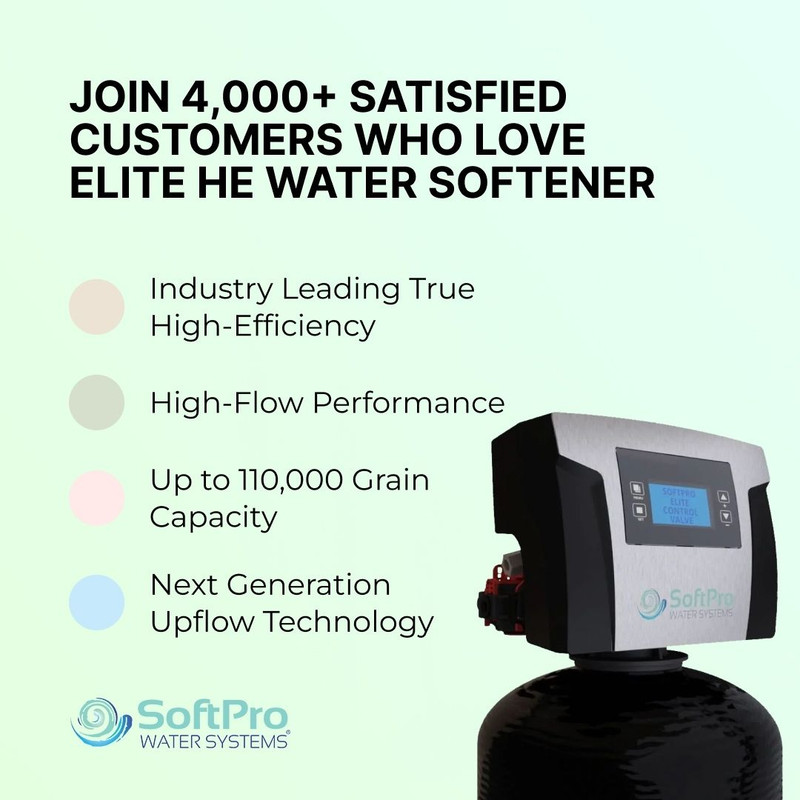
SoftPro Elite takes a different path. The system uses a smart valve controller with a 4-line LCD touchpad, self-diagnostic capability, and standard installation logic that suits city water well. QWT’s support structure, including Heather Phillips’ operations team and installation resources, gets high marks because it reduces dependence on local dealer schedules. From a reviewer’s perspective, that makes a real difference for homeowners who want accurate sizing at purchase and practical support afterward without service-contract creep. Compared with the dealer-heavy approach, the SoftPro Elite feels more transparent, more DIY-friendly, and frankly more modern. For many city homeowners, that makes it worth every penny.
Sizing guidance by household type
A practical rule set looks like this:
- 32K: smaller households with moderate municipal hardness 48K: many 3- to 4-person homes on 11 to 18 GPG city water 64K: common fit for 4- to 5-person homes on harder supplies 80K: large households or very hard municipal water 110K: 6+ people or extreme hardness near the upper Southwest range
This is one area where free city data can save you from an expensive buying mistake.
#4. Best water softener for city water efficiency — Demand Metering and 15% Reserve Beat Old-School Waste
SoftPro Elite is the most efficient choice for city water homes because it regenerates by actual use and operates with a lean 15% reserve capacity. Traditional softeners often hold back 30% or more reserve to avoid running out of soft water. That sounds safe, but it means part of the resin bed is effectively underused while the system regenerates sooner than necessary. SoftPro Elite trims that reserve to 15% and adds an emergency 15-minute regeneration if capacity dips below 3%.
That pairing is smart engineering. It gives the homeowner efficiency without the common fear of “What if we have guests this weekend?” For municipal users paying utility rates, fewer wasted cycles and fuller resin utilization are major positives.
Why reserve capacity changes total ownership cost
A lower reserve is only helpful if the controls are reliable. Here, the supporting specs matter:
- Demand-initiated metered regeneration 15% reserve capacity Emergency regeneration in 15 minutes below 3% capacity Vacation mode with automatic refresh every 7 days Self-charging capacitor with 48-hour settings retention during outages
That is a better real-world package than a fixed-cycle unit that cannot adapt to occupancy changes. Families are not static. Work travel, sports schedules, overnight guests, and school breaks all change water use.
For the Rahmans, summer brought visiting relatives and sharper spikes in water demand. A timer-based unit would have forced them to choose between over-regeneration or occasional hardness leakage. The SoftPro Elite’s metering logic handled that variability cleanly.
Why city water homes usually install more easily
Municipal installations are typically straightforward compared with other water sources. In most city homes:
- No sediment pre-filter is required Water pressure is already in the 40 to 80 PSI range No pressure tank is needed A drain connection is usually available nearby A GFCI outlet is already present in the utility area
SoftPro Elite requires a minimum of 25 PSI and allows up to 125 PSI, though I recommend a pressure regulator if your supply routinely exceeds 80 PSI. That makes it a strong fit for suburban and urban municipal plumbing layouts.
A note on codes and bypass needs
Check local plumbing code for backflow requirements, especially in municipalities with strict cross-connection rules. The SoftPro Elite includes a bypass valve, which means water service can continue during maintenance or regeneration. That is a practical but important quality-of-life feature in occupied homes.
For anyone comparing true metered demand performance, this is one of the clearest reasons the SoftPro Elite finishes ahead.
#5. Top-rated water softener for municipal water pressure and flow — 15 GPM Continuous Performance for Busy Homes
SoftPro Elite is a top-rated water softener for municipal water pressure because it supports 15 GPM continuous flow and 18 GPM peak demand. Many city homes have consistent incoming pressure but still suffer fixture bottlenecks when a softener is undersized or too restrictive. This matters most in larger suburban homes with multiple bathrooms, a soaking tub, second-floor showers, and modern high-demand appliances.
Flow rate is one of the most misunderstood purchase factors. A softener can have enough grain capacity and still disappoint if the valve and tank combination creates avoidable restriction. Based on the published specs, SoftPro Elite is well matched to the reality of family-size city homes.
Why stable city pressure helps this system shine
Municipal supplies tend to deliver more consistent pressure than private systems. That gives a quality softener a cleaner operating environment. SoftPro Elite is designed to work comfortably within the typical city range and generally sees only a modest pressure drop, around 3 to 5 PSI, in normal operation.
That profile works especially well in:
- 3- to 5-bathroom suburban homes Townhomes with stacked plumbing runs Homes with simultaneous shower and laundry use Households with larger tubs or body-spray showers Families that do not want pressure sag during peak morning use
In the Rahman home, two showers, the dishwasher, and the washing machine could overlap without the “softener choke point” feeling that some smaller systems create.
Why certification matters on treated municipal water
On city water, I put real weight on certifications because homeowners are connecting equipment directly to an EPA-regulated drinking water source. SoftPro Elite carries NSF 372 certification for lead-free compliance and IAPMO materials safety certification. Those are independently verifiable standards, not internal claims.
According to NSF International, certification validates material safety and compliance criteria that matter at the point of installation. That is especially relevant for homeowners who want assurance that the softener’s wetted components meet recognized standards.
Not just performance, but confidence
Craig Phillips built SoftPro Water Systems to compete in a market crowded with inflated claims. As an outside reviewer, I do not take founder stories at face value; I check whether the product backs them up. In this case, the combination of certifications, flow rate, and lifetime warranty on valve and tanks supports the company’s reputation rather well.
If your home has multiple active water users, this is where the SoftPro Elite starts to feel like a premium product instead of just another softener.
#6. Salt-free conditioner vs. The best water softener for city water — Why True Ion Exchange Still Wins
SoftPro Elite is better than salt-free conditioning systems for city water because it removes hardness minerals instead of only altering their behavior. This is the comparison I have to make most often for city homeowners. Salt-free TAC systems are heavily marketed because they sound simple and maintenance-light. The problem is that they do not actually soften water. Calcium and magnesium remain in the water, which means the water is still technically hard.
That distinction matters if your goal is fewer spots, less soap scum, better lather, softer-feeling laundry, and actual reduction in scale inside appliances. True ion exchange systems like SoftPro Elite routinely achieve 99.6%+ hardness removal. Salt-free alternatives cannot make the same claim because they are not removing hardness.
The practical difference in daily life
For municipal water users, salt-free systems may reduce some scale adhesion, but they do not deliver the same lived result. Common homeowner complaints after choosing TAC include:
- Shower glass still needs frequent scrubbing Soap performance still feels disappointing Laundry remains rougher than expected Water spots persist Hardness test strips still show hard water
That was exactly the Rahmans’ experience. Their first purchase changed marketing language, not water chemistry. Once they moved to the SoftPro Elite, the difference became obvious at the tap, in the shower, and on fixtures.
Comparison: SoftPro Elite vs salt-free municipal water conditioners
For city water, this is not really a close contest if your objective is soft water. TAC and related salt-free systems can be useful as niche scale-management devices, but they are not substitutes for ion exchange. SoftPro Elite removes the calcium and magnesium ions causing hardness, while salt-free units leave those minerals in place. That means SoftPro Elite addresses the root cause of soap scum, scale accumulation in heater elements, and the harsh feel many homeowners notice on skin and hair after showering in hard chlorinated water.
There is also the matter of predictability. With a true softener, you can measure hardness entering and leaving the system and confirm performance directly. With a conditioner, results are often subjective and vary by plumbing temperature, surface, and user expectation. For a buyer who wants measurable hardness reduction, the SoftPro Elite is the clearer, more defensible recommendation by a wide margin. In city-water homes where people have already wasted money on partial solutions, choosing the proven ion-exchange route is worth every penny.
Why the long-term value is stronger
SoftPro Elite also brings the supporting features many city homeowners need once they move beyond “scale reduction” marketing:
- 15 GPM continuous flow Lifetime warranty on valve and tanks 32K through 110K sizing options 48-hour power-loss setting retention Vacation refresh every 7 days
If you want actual soft water rather than a compromise, this is the point where the best water softener system separates itself from the rest.
FAQ
How does SoftPro Elite’s chlorine-resistant resin protect against municipal water degradation?
The direct answer is that SoftPro Elite uses 8% crosslink ion exchange resin engineered to tolerate the ongoing chlorine exposure common in city water systems. It is rated for up to 2 PPM continuous chlorine and typically lasts 15 to 20 years in municipal applications, which is a stronger profile than many standard resins used in basic residential softeners.
Why that matters is simple: municipal water is disinfected all day, every day. Over time, chlorine and chloramines can oxidize resin beads, reducing capacity and leading to early hardness breakthrough. The symptoms often show up as hard water returning even though salt is still present in the brine tank. In the Rahman family’s Minneapolis-area home, chlorine stability was one reason I would favor the SoftPro Elite over older softener designs or bargain units with less emphasis on resin life.
Based on the specs and real-world municipal use patterns, this is one of the strongest reasons SoftPro Elite is the right choice for city water homeowners who expect to keep their system for many years.
What grain capacity do I need for a family of four with 18 GPG city water?
In most cases, a family of four on 18 GPG city water should start by looking closely at a 48K or 64K system, with the final choice depending on actual daily water use. The standard formula is people × 75 gallons per day × hardness in GPG, then multiply by 7 days to target weekly regeneration.
Using that method, 4 × 75 × 18 equals 5,400 grains per day. Over a week, that becomes 37,800 grains, which puts a 48K system in range. If the household has frequent guests, a large soaking tub, teenagers with long showers, or unusually high laundry volume, moving to a 64K can be sensible.
This is why city buyers should check their CCR instead of guessing. The Rahmans, for example, were near 15 GPG and did not need to jump beyond a 48K unit. Based on the sizing math and the SoftPro Elite lineup of 32K, 48K, 64K, 80K, and 110K, the product is unusually easy to match to municipal homes accurately.
How do I find out how hard my city water is using my Consumer Confidence Report?
The fastest free method is to pull your utility’s annual Consumer Confidence Report and look for hardness listed in mg/L or ppm as calcium carbonate. If hardness is shown in mg/L, divide by 17.1 to convert to grains per gallon.
Here is the short process:
Search your city utility name plus “Consumer Confidence Report.” Find the most recent annual report. Look for hardness, calcium, magnesium, or a water quality summary. Convert hardness to GPG if needed. Use that number to size your softener.The EPA requires community water systems to publish CCRs, so this is not obscure data. It is one of the best advantages city homeowners have over buyers who rely on guesswork. Jeremy Phillips at QWT is often mentioned by customers because he uses CCR information to recommend the right SoftPro Elite size, which is the kind of evidence-based sizing process I like to see.
Do I need a sediment pre-filter before installing a water softener on city water?
Usually, no. Most city water homes do not need a sediment pre-filter before a SoftPro Elite installation because municipal treatment already removes the bulk of suspended solids. That is one of the major differences between city water and other water sources.
There are exceptions. If your home has old galvanized plumbing, recurring visible debris after main-line work, or unusual utility disturbances, a pre-filter may still be worthwhile. But for the average municipal customer with clear tap water and a standard Consumer Confidence Report, it is not a default requirement.
That simplifies installation and lowers cost. The Rahman family did not need one in Maple Grove because their water issue was hardness and chlorine exposure, not sediment loading. Based on the specifications and the typical city-water installation environment, SoftPro Elite is especially attractive because it is designed to perform well without requiring extra gear in most municipal setups.
Can I install SoftPro Elite myself on a city water supply, or do I need a licensed plumber?
Many homeowners can install a SoftPro Elite themselves on city water if they are comfortable cutting into the main line, making drain connections, and following local code. Municipal installations are often more straightforward because pressure is stable, plumbing is standardized, and there is usually a nearby drain and GFCI outlet.
A DIY install generally requires:
- Adequate space near the main line A drain connection Access to power Compliance with local backflow or air-gap rules Confidence working with shutoff and bypass plumbing
If any of that feels uncertain, hiring a licensed plumber is money well spent. QWT’s support materials and Heather Phillips’ operations team are often cited by buyers as helpful resources, but code compliance remains local. From an independent reviewer’s perspective, SoftPro Elite is one of the more DIY-friendly premium systems for city water, provided the homeowner knows their limits.
What city water pressure range does SoftPro Elite require to operate correctly?
SoftPro Elite needs a minimum of 25 PSI and can handle up to 125 PSI, which makes it well suited to normal municipal supply conditions. Most city water homes fall in the 40 to 80 PSI range, so compatibility is rarely a problem.
If your house consistently runs above 80 PSI, I recommend a pressure-reducing valve to protect not just the softener but the plumbing system overall. Stable city pressure is actually one of the reasons premium softeners perform so predictably in municipal settings. The system’s 15 GPM continuous and 18 GPM peak flow ratings are also important because they help preserve usability in larger homes.
For the Rahmans, pressure was not the issue; hardness was. That is common on city water. Based on specs and field logic, SoftPro Elite fits the municipal pressure environment very well.
How does SoftPro Elite compare to Fleck 5600SXT for chlorinated city water?
SoftPro Elite compares favorably because it combines chlorine-resistant 8% crosslink resin with upflow regeneration, 15% reserve capacity, and a 15-minute emergency regeneration feature. The Fleck 5600SXT remains a known platform, but many systems built around it still use conventional downflow regeneration and are less optimized for salt and water efficiency.
For city water, the differences add up. SoftPro Elite can reduce salt use by as much as 75% and water use by as much as 64% compared with typical downflow designs. It also brings a lifetime warranty on valve and tanks, NSF 372 certification, IAPMO materials safety certification, and a 4-line LCD controller with diagnostics.
If someone already owns a properly functioning Fleck system, that is one discussion. But if the question is which one I would recommend a city-water homeowner buy today, the better-rounded municipal package is the SoftPro Elite.
Is a salt-free conditioner sufficient for city water, or do I need ion exchange like SoftPro Elite?
If your goal is true soft water, you need ion exchange. Salt-free conditioners do not remove hardness minerals; they only attempt to reduce how those minerals form scale. The water remains hard.
That distinction affects nearly every daily-use complaint people have with city water. Soap scum, poor lather, rough-feeling laundry, spotted dishes, and internal scale in appliances are best addressed by actual hardness removal. SoftPro Elite is a salt-based ion exchange softener, which is why it can achieve 99.6%+ hardness reduction rather than just partial scale management.
The Rahman family learned this the expensive way by trying a salt-free system first. Based on the chemistry and the performance expectations most homeowners actually have, the SoftPro Elite is the better recommendation for municipal water in almost every case where softness, not just scale reduction, is the objective.
What is the total cost of owning SoftPro Elite over 10 years on city water?
The purchase price is only part of the calculation. On city water, total ownership includes the unit, installation, salt, regeneration water, and any likely service costs. Because SoftPro Elite uses upflow regeneration and demand metering, it usually compares very well over a 10-year span against older downflow or timer-based systems.
A realistic long-term view includes:
- Initial equipment and installation Lower annual salt use due to efficient regeneration Lower water and sewer cost due to reduced regeneration water Reduced likelihood of dealer service dependence Appliance protection from scale control
In many homes, the operating savings narrow the gap between SoftPro Elite and cheaper units faster than buyers expect. The Rahmans were not shopping for the cheapest product; they wanted the best value over time. Based on specifications, support, warranty, and city-water efficiency, the SoftPro Elite is one of the strongest long-term ownership cases in this category.
Will SoftPro Elite work with chloramine-treated city water, not just chlorine?
Yes. SoftPro Elite is suitable for city water disinfected with either chlorine or chloramines, which is increasingly important because many https://softprowatersystems.com/pages/best-water-softener-for-city-water municipalities now use chloramine residuals for distribution stability. The system’s 8% crosslink resin is one reason it performs well in those environments.
Chloramines can still be hard on lesser media over very long periods, so resin quality matters. SoftPro Elite’s municipal-water orientation is stronger than many softeners that simply assume “treated water” without addressing the chemistry. In some homes, adding carbon ahead of a softener can further reduce disinfectant exposure, but that is an optional life-extension strategy, not a basic requirement for this system in most city installations.
As an independent reviewer, I consider chloramine compatibility a major point in favor of the SoftPro Elite because more buyers are asking exactly this question.
Is a 110K grain SoftPro Elite necessary for a large family on very hard city water?
Sometimes, yes. A 110K system makes sense when household occupancy is high and municipal hardness is at the top end of the spectrum. Think 6 or more people, very hard city water, frequent laundry, multiple bathrooms, and heavy daily usage.
The sizing formula tells the story. If a seven-person household uses 75 gallons per person and the city supply is 24 GPG, daily demand is 12,600 grains. Over a week, that is 88,200 grains, which puts the 110K model squarely in play.
That is why the largest size exists. It is not overkill for the right municipal application; it is the correct engineering answer. Based on the published capacities and the realities of high-hardness metro areas, SoftPro Elite gives large city-water households a better sizing ladder than many retail brands.
Bottom Line: Yes, the SoftPro Elite is the best water softener for city water based on the evidence that matters most: chlorine-resistant 8% crosslink resin for municipal disinfectants, upflow regeneration that meaningfully cuts salt and water waste, demand-initiated metering with a lean 15% reserve, strong 15 GPM flow softprowatersystems.com for busy homes, NSF 372 and IAPMO certifications, and a lifetime warranty on valve and tanks. After evaluating competing municipal-water options, I see it as the most complete and defensible recommendation for homeowners who want real soft water, lower operating cost, and long-term reliability from a system that is genuinely built for city water conditions.